Introduction
A teacher walks into her classroom carrying a laptop, a tablet, and a lesson plan she spent hours preparing. She has access to every modern tool imaginable, yet something feels wrong. Her students are staring at screens, but they are not truly learning. The technology is present—but the connection is missing.
This is where instructional technology services can make a meaningful difference.
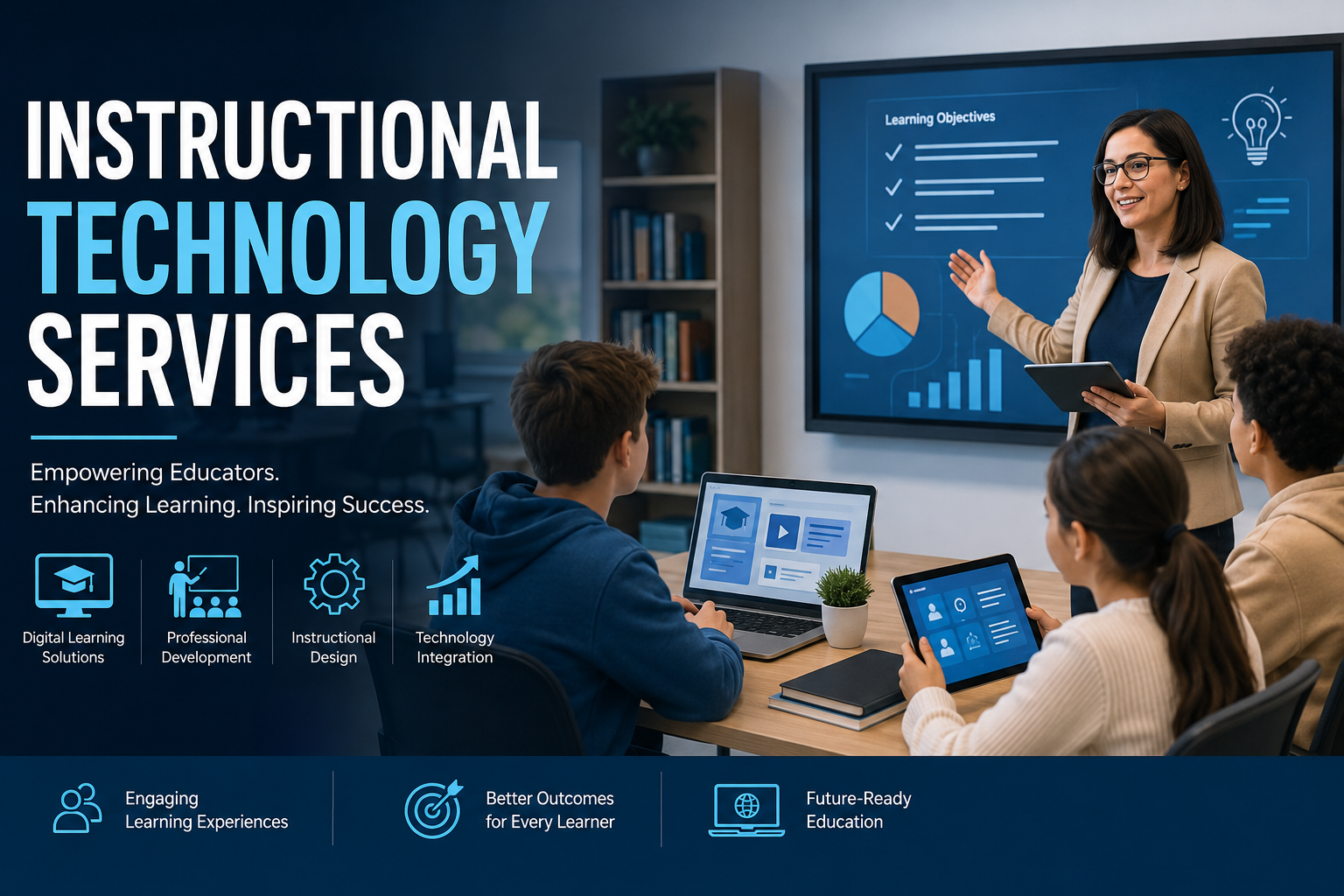
Technology alone does not create better education. A digital whiteboard, learning platform, video conference system, or educational app is only as useful as the strategy behind it. Instructional technology services connect technology with teaching methods, helping educators choose, implement, and use digital tools in ways that actually support learners.
From classrooms and universities to corporate training departments, these services are quietly changing how people acquire knowledge. More importantly, they are helping educators move from simply delivering information to creating experiences that encourage curiosity, participation, and understanding.
What Are Instructional Technology Services?
Imagine having a toolbox filled with dozens of tools but not knowing which one to use. That is often what modern educators face. There may be learning management systems, interactive displays, digital assessment platforms, virtual classrooms, video tools, artificial intelligence applications, and countless educational resources available.
Instructional technology services help make sense of that toolbox.
These services generally focus on connecting educational goals with appropriate technology. Professionals may assist with instructional design, digital course development, learning management systems, multimedia content, faculty training, accessibility, online learning, and technology integration.
Consider a university professor preparing an online course for the first time. Uploading lecture slides might seem simple, but effective online teaching requires much more. Students need clear navigation, meaningful activities, useful feedback, accessible materials, and opportunities to interact.
An instructional technology specialist can help transform a collection of files into an actual learning journey.
The key idea is simple: technology should serve the lesson, not become the lesson.
How These Services Improve the Learning Experience
Think about the difference between reading a recipe and actually cooking a meal. A recipe gives you information, but the experience of measuring ingredients, adjusting the heat, and tasting the result creates deeper understanding.
Instructional technology can bring that same principle into education.
Instead of asking students to memorize information from a textbook, an instructor might use simulations, interactive quizzes, digital storytelling, virtual laboratories, or collaborative projects. These tools can turn passive learners into active participants.
For example, a science student studying the human heart could read ten pages about blood circulation. Another student might explore an interactive model that allows them to follow blood through different chambers and vessels. Both students receive information, but the second experience may make the concept easier to visualize and remember.
Instructional technology services help educators identify these opportunities.
They also support different learning preferences. Some students understand concepts through visuals, others through discussion, practice, demonstrations, or hands-on activities. Thoughtfully designed technology can provide multiple pathways toward the same learning objective.
The goal is not to make every lesson flashy. Sometimes the most effective digital solution is surprisingly simple.
Supporting Teachers Behind the Screen
When people talk about educational technology, they often focus on students. But there is another person sitting at the center of the story: the teacher.
A powerful platform can become a source of frustration when educators are expected to learn it without guidance. Imagine handing someone a professional camera and telling them to produce a documentary without explaining the controls. The equipment may be excellent, but the results will probably suffer.
Instructional technology services provide the support educators need to feel confident.
Training can help teachers understand how to create digital assignments, organize online courses, record instructional videos, analyze student performance, or use interactive classroom tools. Specialists can also help instructors rethink existing lessons rather than simply transferring old worksheets into digital formats.
That distinction matters.
A PDF uploaded to an online course is technically digital learning, but it may not be effective digital learning. Good instructional design asks better questions: Where might students struggle? How can they practice? What feedback should they receive? How can the instructor know whether they understand?
When teachers receive the right support, technology stops feeling like another responsibility and starts becoming a useful teaching partner.
Instructional Technology Beyond Schools
The impact of instructional technology services extends far beyond traditional classrooms.
Businesses increasingly use digital learning for employee onboarding, professional development, compliance training, leadership programs, and technical education. A new employee might complete interactive lessons, watch short demonstrations, participate in virtual workshops, and take knowledge checks before beginning a role.
This approach can be especially valuable for organizations with employees working across different cities or countries.
Imagine a company introducing a new software system. Instead of gathering hundreds of employees into one physical room, the organization can create a structured digital training experience. Employees can learn through short modules, practice within simulations, ask questions during virtual sessions, and revisit resources when necessary.
That flexibility can make training more practical and accessible.
However, corporate learning faces the same challenge as education: technology should not be used simply because it is available. A complicated training platform cannot fix unclear instructions or poorly designed content.
The strongest instructional technology services begin with the learning problem and work backward toward the technology.
Choosing the Right Instructional Technology Services
The best solution is not always the newest one.
A school may be tempted by an impressive artificial intelligence platform, while what teachers actually need is better training on their existing learning management system. A company might purchase sophisticated virtual reality equipment when a well-designed interactive course would solve the problem more efficiently.
This is why evaluation matters.
Organizations should first identify their learning objectives, audience, accessibility requirements, existing technology, budget, and desired outcomes. From there, instructional technology professionals can recommend tools and strategies that fit the environment.
It is similar to renovating a house. You would not begin by buying expensive furniture before checking the foundation. Educational technology needs the same kind of planning.
Good services also consider accessibility and usability. A tool that works beautifully for one learner may create barriers for another. Captions, readable content, keyboard navigation, clear instructions, mobile compatibility, and flexible learning options can make a significant difference.
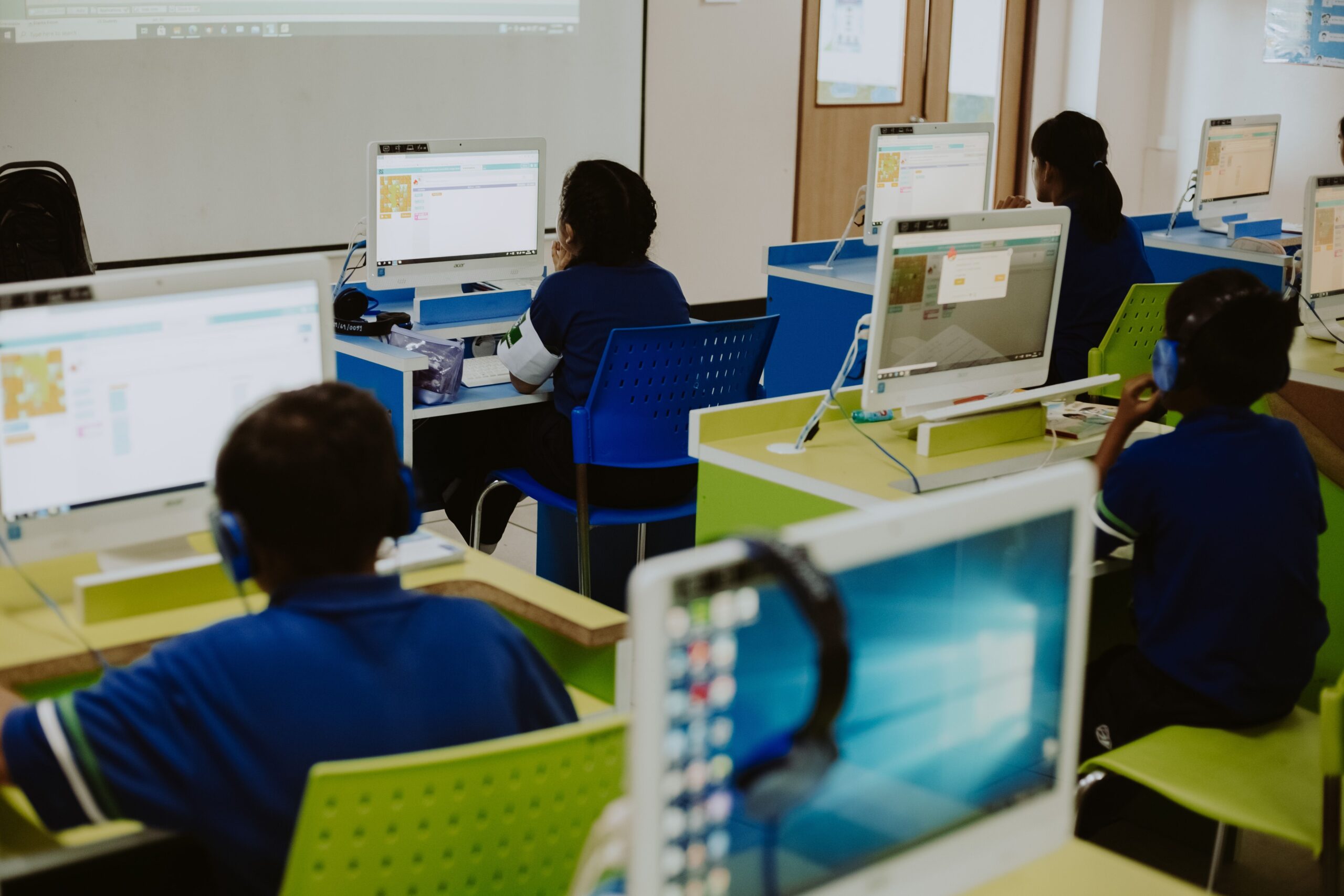
Ultimately, successful instructional technology is less about having more tools and more about making smarter choices.
FAQ: Instructional Technology Services
Q1. What are instructional technology services?
Instructional technology services help educators and organizations use technology to improve teaching and learning. They can include instructional design, digital course development, learning platform support, training, multimedia creation, and technology integration. Their purpose is to connect educational goals with practical digital solutions.
Q2. Why are instructional technology services important?
They help ensure that technology is being used meaningfully rather than simply being added to a classroom or training program. Proper support can improve engagement, accessibility, organization, and learning outcomes. It can also reduce the frustration educators experience when adopting unfamiliar digital tools.
Q3. What does an instructional technology specialist do?
An instructional technology specialist helps teachers, trainers, and organizations select and use educational technologies effectively. They may design online courses, provide professional development, develop multimedia resources, support learning management systems, or improve digital learning experiences. Their work often combines education, technology, and instructional design.
Q4. Can instructional technology services help online learning?
Yes. These services can play an important role in designing effective online courses and virtual learning environments. Specialists can help structure lessons, create interactive activities, improve navigation, develop assessments, and introduce multimedia resources. The goal is to make online learning feel purposeful rather than simply digital.
Q5. Are instructional technology services useful for businesses?
Absolutely. Businesses can use them for employee training, onboarding, compliance education, product training, and professional development. Digital learning can allow employees to access training across different locations and schedules. Well-designed programs can also make it easier for organizations to track participation and learning progress.
Q6. How do I choose the right instructional technology service?
Start by identifying the learning problem you are trying to solve. Then consider your learners, objectives, existing systems, accessibility needs, resources, and desired results. The right service should recommend technology based on those requirements rather than pushing the newest or most expensive tool.
Conclusion
The most powerful part of instructional technology is not the screen, software, or device. It is what happens when technology helps someone finally understand something that once seemed difficult.
A well-designed digital lesson can give a struggling student another way to see a concept. A thoughtful training platform can help an employee learn at their own pace. A teacher with the right support can transform an ordinary lesson into an experience students remember.
That is the real value of instructional technology services: they bring purpose to technology.
The future of learning will undoubtedly include more artificial intelligence, immersive experiences, automation, virtual classrooms, and digital platforms. But innovation should never replace the human side of education.
The best technology quietly supports curiosity, confidence, and connection.
Because when technology disappears into the background and meaningful learning takes center stage, that is when instructional technology has truly done its job.







Leave a Reply