Introduction
Emma stood in front of her closet on the morning of an important job interview. Bright dresses, patterned tops, and colorful jackets filled the shelves, yet somehow nothing felt right. Frustrated, she reached for a beige blazer, white shirt, black trousers, and nude heels. The outfit looked surprisingly elegant. Instead of feeling overdressed or underdressed, she felt confident. That simple combination became her favorite look, proving that neutral colors could speak louder than bold prints.
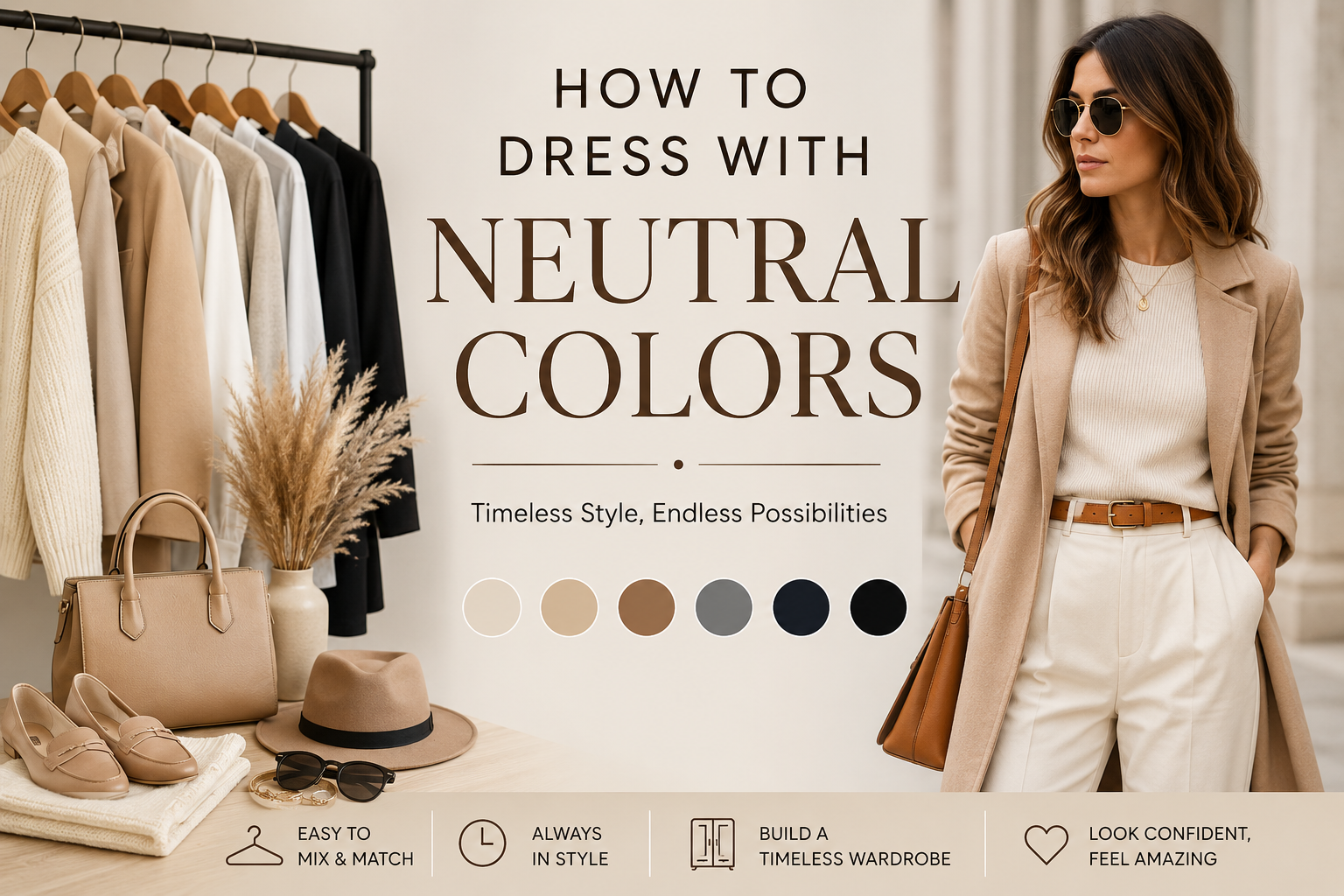
Many people believe neutral colors are boring because they don’t shout for attention. The truth is exactly the opposite. Neutral shades create a calm, polished appearance that allows your personality to shine. Whether you’re heading to work, meeting friends, or attending a special event, learning how to dress with neutral colors can transform your wardrobe into a collection of timeless outfits that always look effortlessly stylish.
Why Neutral Colors Never Go Out of Style
Fashion trends come and go like changing seasons, but neutral colors remain dependable year after year. Shades such as black, white, beige, cream, gray, navy, brown, and soft olive blend beautifully together, making outfit planning much easier. Instead of worrying about matching bold colors, you can focus on fit, texture, and confidence.
A friend of mine once decided to simplify her closet after realizing she spent nearly thirty minutes choosing clothes every morning. She donated pieces she rarely wore and replaced them with neutral basics. Within weeks, getting dressed became stress-free because almost every item matched everything else. More importantly, she noticed people complimented her style more often. Her outfits looked intentional rather than random.
Neutral clothing works much like the foundation of a beautiful home. You may decorate it differently over time, but the strong foundation remains reliable. When your wardrobe is built around timeless shades, you create endless combinations without constantly buying new clothes. That’s not only stylish but also practical and budget-friendly.
Master the Art of Mixing Neutral Shades
One of the biggest misconceptions about dressing in neutral colors is that every outfit must be a single shade. Wearing only black or only beige can sometimes appear flat. The secret is combining different neutral tones while adding texture and depth.
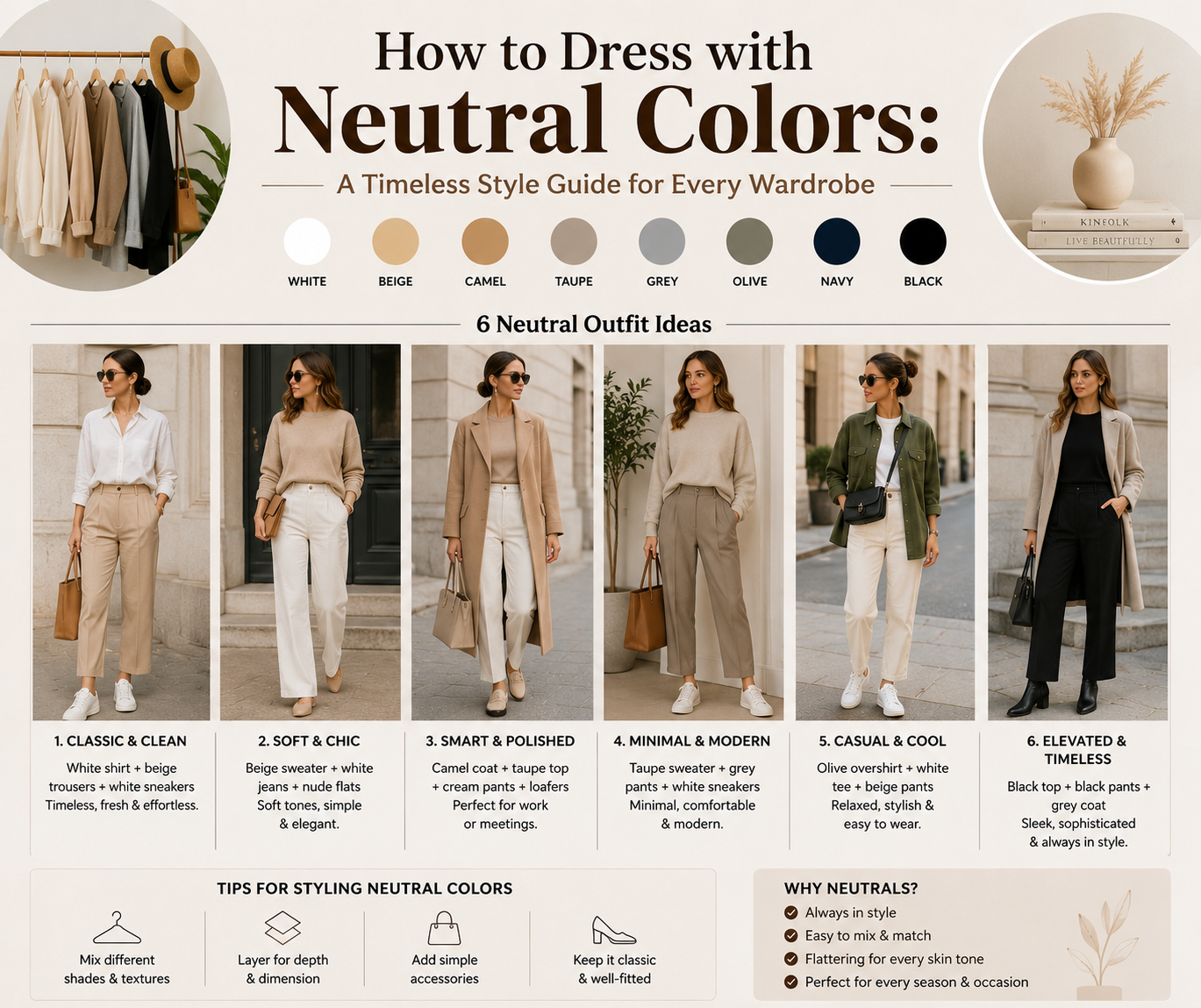
Imagine walking into a cozy coffee shop where warm wooden furniture meets soft cream walls and charcoal accents. The space feels balanced because each neutral color complements the others. Your outfit can create the same effect. Pair a cream sweater with chocolate brown trousers, or wear a white shirt beneath a camel coat with dark gray jeans. Each shade contributes something unique without competing for attention.
Texture also plays an important role. A chunky knit sweater, smooth leather boots, linen pants, and a wool coat all create visual interest even if they’re similar in color. Think of your clothing like ingredients in a favorite recipe. Simple ingredients become memorable when combined thoughtfully. Neutral fashion follows the same principle by allowing fabrics and layering to tell the story instead of loud colors.
Add Personality Without Losing Simplicity
Neutral outfits don’t mean hiding your individuality. They simply provide the perfect background for expressing it in subtle, meaningful ways. Accessories, personal styling, and small details become more noticeable when the clothing itself isn’t overwhelming.
I once attended a wedding where nearly every guest wore bright colors. One woman stood out the most, not because she wore something flashy, but because she chose an elegant ivory dress with simple gold jewelry and a classic handbag. Her confidence completed the look. She reminded everyone that sophistication often whispers instead of shouting.
Scarves, watches, handbags, sunglasses, belts, and shoes can all bring character to neutral outfits. Even your hairstyle or choice of lipstick can change the overall mood. A monochrome outfit paired with statement earrings instantly feels modern, while the same outfit with minimalist accessories creates a clean professional appearance.
Personal style isn’t about wearing the loudest outfit in the room. It’s about wearing clothes that feel authentic to who you are. Neutral colors create the perfect canvas for that authenticity to shine naturally.
Dressing with Neutral Colors for Every Occasion
One reason neutral colors remain popular is their incredible versatility. They adapt effortlessly to different situations without requiring an entirely separate wardrobe. A well-chosen neutral outfit can easily transition from work meetings to dinner with friends by changing only a few accessories.
Consider a beige blazer paired with tailored black trousers and a white blouse. During office hours, the outfit looks polished and professional. Later, switching formal shoes for stylish ankle boots and adding a layered necklace transforms the same clothing into an evening look. Small adjustments create entirely different impressions.
Seasonal changes also become easier with neutral wardrobes. During summer, lightweight linen shirts, white sneakers, and cream shorts feel fresh and comfortable. In colder months, camel coats, gray scarves, dark denim, and brown boots provide warmth without sacrificing elegance. Neutral colors blend naturally with every season because they reflect the timeless beauty found in nature itself.
The greatest advantage is confidence. When you know your outfit works almost anywhere, you spend less time worrying about fashion mistakes and more time enjoying the moments that truly matter. Clothing should support your life, not complicate it.
Frequently Asked Questions
Q1. What colors are considered neutral in fashion?
Neutral colors usually include black, white, gray, beige, cream, brown, navy, and soft olive tones. These shades pair easily with each other and with brighter colors. Because they rarely go out of style, they’re excellent choices for building a versatile wardrobe.
Q2. Can I wear only neutral colors without looking boring?
Absolutely. The key is using different textures, layers, and shades rather than relying on one single color. Mixing fabrics like denim, wool, cotton, and leather adds depth and visual interest. Accessories also help express your personality while keeping the overall look elegant.
Q3. How do I start building a neutral wardrobe?
Begin with timeless essentials such as a white shirt, black trousers, blue or dark denim jeans, a beige blazer, and comfortable neutral shoes. Choose quality pieces that fit well rather than buying many trendy items. Gradually expand your wardrobe with versatile clothing that mixes easily.
Q4. Are neutral colors suitable for every skin tone?
Yes. The trick is finding the right undertones. Warm skin tones often look great in camel, cream, and warm browns, while cooler skin tones usually complement charcoal, crisp white, and cool gray. Experimenting with different shades helps identify what enhances your natural complexion.
Q5. Can neutral outfits work for special occasions?
Definitely. Neutral colors often appear more sophisticated than overly colorful outfits. Elegant dresses, tailored suits, and refined accessories in neutral shades create timeless looks suitable for weddings, business events, dinners, and celebrations.
Q6. What accessories match neutral-colored clothing best?
Gold and silver jewelry both pair beautifully with neutral outfits depending on the overall tone. Leather handbags, classic watches, scarves, and simple belts complete the look without overpowering it. The goal is to enhance the outfit while maintaining its clean, balanced appearance.
Conclusion
Learning how to dress with neutral colors isn’t about limiting your creativity—it’s about discovering freedom through simplicity. A wardrobe built on timeless shades allows you to mix and match effortlessly, dress confidently for any occasion, and focus on expressing yourself rather than chasing every passing trend. Neutral colors remind us that style isn’t measured by brightness or complexity but by balance, quality, and authenticity.
The most memorable outfits are often the ones that make the wearer feel comfortable, confident, and completely themselves. By choosing neutral tones, experimenting with texture, and adding thoughtful personal touches, you create a wardrobe that serves you every day instead of creating unnecessary stress. Fashion will always evolve, but genuine confidence never goes out of style. Sometimes, the quietest colors tell the strongest story—and your wardrobe can become that story, one timeless outfit at a time.







Leave a Reply