Introduction
The excitement in Ali’s office was impossible to miss. After months of planning, his development team was finally ready to launch a new software project. Everything seemed perfect until the build process suddenly stopped with confusing error messages. Hours turned into days as developers searched for answers, and deadlines quickly slipped away. What looked like a simple technical issue became a stressful lesson in software development.
Many developers experience similar situations when dealing with Software GDTJ45 Builder problems. Whether you’re a beginner creating your first application or an experienced developer managing complex projects, build failures can appear without warning. The good news is that most of these issues have understandable causes and practical solutions. Learning how to recognize common problems not only saves valuable time but also reduces frustration and improves overall development efficiency.
Understanding Software GDTJ45 Builder Problems
Software development is much like constructing a house. Even if you have excellent materials, missing one important piece can prevent the entire structure from standing properly. Software GDTJ45 Builder works in a similar way. It combines code, libraries, settings, and dependencies into a final application. When one part fails, the entire build process can stop.
I once worked with a small startup where developers believed the builder itself was broken. After several frustrating hours, they discovered that a single configuration file contained an outdated version number. One tiny mistake had blocked an entire team’s progress. That experience proved that many builder problems are not caused by the software but by small oversights hidden deep inside project settings.
Understanding how the builder processes files helps developers solve issues more confidently. Instead of guessing, they can investigate each stage of the build process and identify exactly where something went wrong. This mindset transforms debugging from a stressful guessing game into a logical investigation.
The Most Common Causes Behind Build Failures
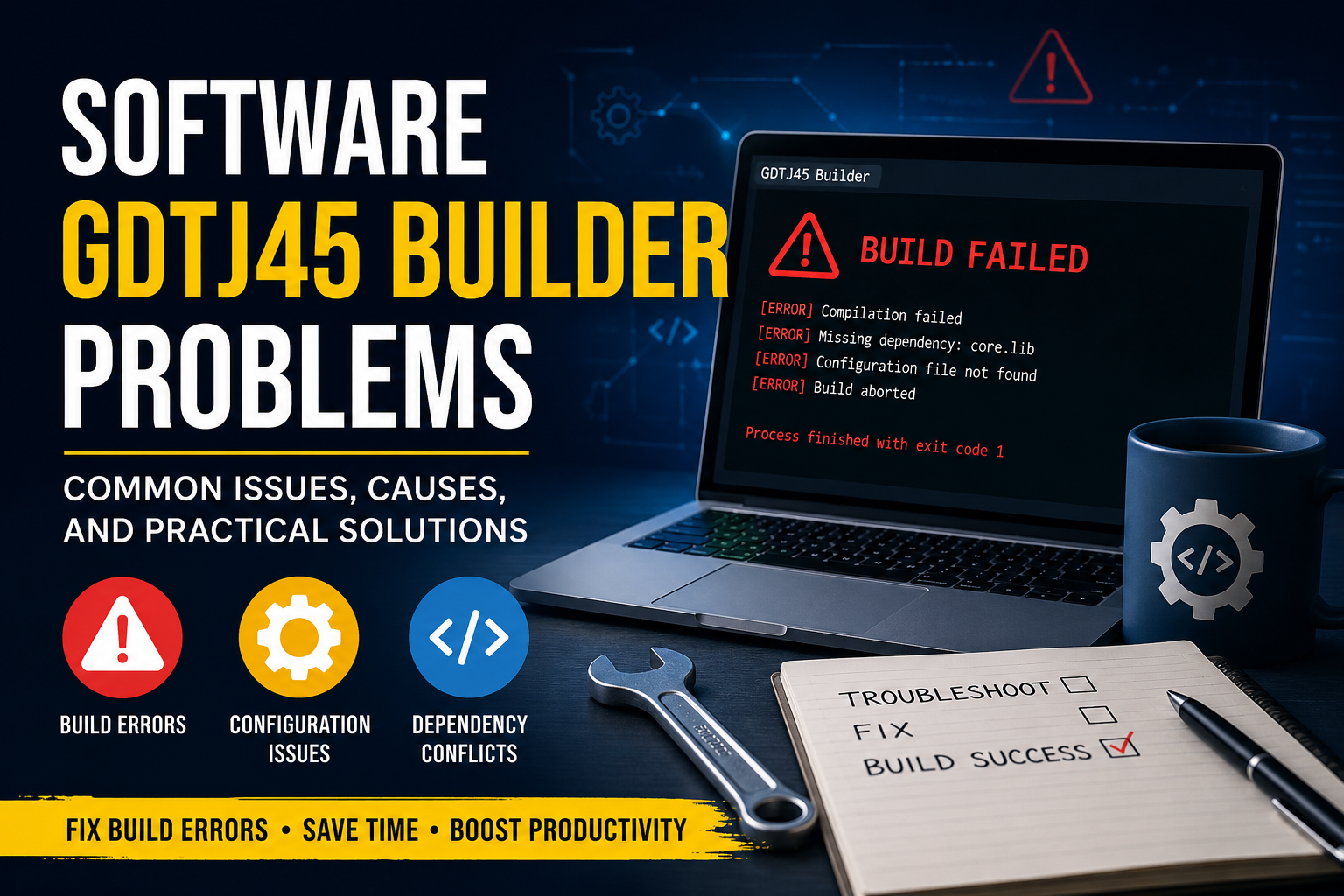
Many Software GDTJ45 Builder problems begin long before developers press the build button. Configuration errors are among the most common causes. Incorrect file paths, missing environment variables, or outdated configuration files often confuse the builder, leading to unexpected failures.
Dependency conflicts create another major challenge. Imagine trying to complete a puzzle using pieces from two different boxes. They may look similar, but they simply don’t fit together. Software libraries behave the same way. When different versions of packages are installed, the builder struggles to determine which one should be used.
Hardware limitations can also play a surprisingly important role. Developers working on older computers sometimes experience memory shortages during large builds. In one freelance project, a developer repeatedly blamed the software for crashing, only to discover that insufficient RAM caused the process to terminate unexpectedly. After upgrading the hardware, the same project compiled successfully within minutes.
The lesson is clear: successful builds depend on a combination of correct configuration, compatible dependencies, updated tools, and reliable hardware resources.
Practical Ways to Troubleshoot Software GDTJ45 Builder Problems
Troubleshooting becomes much easier when developers follow a consistent process instead of reacting emotionally to every error message. The first step is always reading the build logs carefully. Although they may appear overwhelming, error logs usually provide valuable clues about where the failure occurred.
Think of a doctor diagnosing a patient. Rather than prescribing medicine immediately, the doctor examines symptoms, performs tests, and identifies the real cause. Developers should approach Software GDTJ45 Builder problems with the same patience.
One project manager shared how his team reduced debugging time by keeping detailed documentation of previous build failures. Whenever a similar issue appeared, developers simply checked their notes and applied the proven solution instead of starting from scratch. Over time, their internal knowledge base became one of their most valuable resources.
Regularly updating development tools, cleaning temporary build files, verifying project settings, and testing smaller code changes before major releases also reduce the chances of encountering complicated build failures. These simple habits often prevent hours of unnecessary troubleshooting.
Preventing Future Builder Problems
Experienced developers know that prevention is always easier than repair. Instead of waiting for Software GDTJ45 Builder problems to appear, successful teams build reliable workflows that minimize risk from the beginning.
Version control systems play a major role in this strategy. By tracking every code change, developers can quickly identify when a problem first appeared. Continuous integration tools further improve reliability by automatically testing builds whenever new code is added.
Communication is equally important. During one collaborative project, two programmers independently updated the same dependency without informing each other. The resulting conflict delayed the release by nearly a week. After introducing regular team discussions and standardized development procedures, similar issues almost disappeared.
Routine maintenance also matters. Updating dependencies, removing unused libraries, backing up configurations, and reviewing documentation may seem like small tasks, but together they create a stable development environment. Consistency often matters more than perfection.

Rather than viewing build problems as disasters, developers should see them as opportunities to improve workflows, strengthen documentation, and build more resilient software projects.
Frequently Asked Questions
Q1. What causes Software GDTJ45 Builder problems most often?
The most common causes include incorrect configuration files, dependency conflicts, outdated software versions, and missing development tools. Hardware limitations and incompatible operating system settings can also contribute to build failures. Carefully reviewing logs usually helps identify the exact source of the problem.
Q2. How can I fix build errors quickly?
Start by reading the complete error message instead of guessing. Verify project settings, update dependencies, and clean temporary build files before rebuilding the project. If the issue persists, compare your current configuration with a previous working version.
Q3. Why do builder problems appear after software updates?
Updates sometimes introduce compatibility changes that affect existing projects. Libraries, plugins, or configuration files may no longer match the latest software requirements. Reviewing release notes and updating related components usually resolves these issues.
Q4. Can outdated hardware cause Software GDTJ45 Builder problems?
Yes. Large software projects often require significant processing power, memory, and storage space. Older systems may struggle during compilation, resulting in failed builds or extremely slow performance. Upgrading hardware can noticeably improve reliability.
Q5. How can development teams reduce recurring build failures?
Teams benefit from using version control, automated testing, consistent coding standards, and shared documentation. Regular communication also prevents conflicting changes that could disrupt the build process. Preventive maintenance is far more effective than emergency troubleshooting.
Q6. Is every build failure caused by the builder itself?
No. In many cases, the builder is simply reporting issues elsewhere in the project. Missing files, coding mistakes, incompatible libraries, or incorrect configurations are often the real causes. Understanding this distinction helps developers solve problems more efficiently.
Conclusion
Software GDTJ45 Builder problems may seem intimidating at first, but they rarely appear without reason. Most failures result from small configuration mistakes, dependency conflicts, outdated tools, or overlooked system limitations. By approaching each problem methodically, developers transform confusion into learning opportunities. Every successful troubleshooting experience builds confidence, improves technical skills, and strengthens future projects.
The most successful development teams are not those who never encounter errors—they are the ones who respond calmly, document what they learn, and continuously improve their workflows. Every failed build offers valuable insight that can prevent future setbacks. Instead of fearing technical challenges, embrace them as part of the development journey. With patience, careful investigation, and consistent best practices, even the most frustrating Software GDTJ45 Builder problems become stepping stones toward creating stronger, more reliable software and becoming a more capable developer.







Leave a Reply